The Role of Product Managers in Successful Software Development
Created on

Businesses rely heavily on software to deliver value, stay competitive, and serve customers effectively. However, building successful software products requires more than just skilled engineers and designers. At the center of every high-performing software team is a Product Manager (PM). This professional bridges the gap between business goals, customer needs, and technical execution.
This article explores the role of product managers in software development, why they matter, and how they contribute to delivering products that actually succeed in the market.
Who is a Product Manager?
A Product Manager is often described as the “CEO of the product”. Unlike a CEO, they do not have direct authority over teams. Instead, they influence direction by aligning stakeholders, prioritizing work, and ensuring the product vision becomes reality.
In software development, a product manager is responsible for several things. They define the product vision and roadmap. They gather and prioritize customer and market requirements. They also work with engineering, design, and business teams to deliver solutions. Finally, they monitor product performance and drive continuous improvement.
In essence, the PM ensures that the right product is being built in the right way and for the right users.
Why Product Managers Are Essential in Software Development
Without a product manager, software projects often fall into common pitfalls. These include scope creep, misaligned priorities, over-engineering, or building features no one actually uses. Here are the main reasons PMs are crucial:
- They align business goals with technical execution.
Engineers usually focus on solving technical challenges, while business leaders concentrate on revenue and growth. The PM connects these perspectives to ensure the product delivers value to both customers and the business.
- They champion the customer’s voice.
PMs represent the end-users inside the development team. They make sure features solve real customer problems and that usability is never overlooked.
- They reduce wasted effort.
By prioritizing features and clarifying requirements, PMs prevent teams from spending months building functionality that adds little value.
- They drive focus and accountability.
With a clear roadmap and defined success metrics, PMs help teams stay on track and measure progress effectively.
Key Responsibilities of a Product Manager in Software Development
1. Defining Product Vision and Strategy
A successful software product begins with a clear vision. The PM collaborates with leadership to establish long-term objectives and devise a strategy that aligns with the company’s mission. This involves analyzing market trends, studying competitors, and identifying opportunities.
2. Roadmap Planning
Once the vision is set, the PM translates it into a roadmap. This is a timeline of features, improvements, and releases. The roadmap provides transparency for all stakeholders and helps teams plan their work efficiently.
3. Gathering and Prioritizing Requirements
PMs collect input from customers, stakeholders, and analytics to understand what features matter most. They then prioritize these based on value versus effort. This ensures that development resources are used wisely.
4. Coordinating Cross-Functional Teams
Software development involves multiple roles such as engineers, designers, QA testers, marketers, and executives. The PM acts as the glue holding these teams together. They facilitate communication and resolve conflicts when they arise.
5. Ensuring Product Quality
Although PMs are not directly coding or testing, they play a role in defining acceptance criteria and ensuring features meet customer expectations. They also oversee beta testing and the collection of user feedback.
6. Measuring Success and Iterating
A product launch is never the end of the journey. PMs track metrics like user engagement, churn, conversion rates, and revenue impact to measure success. Based on these insights, they lead iterations to continuously improve the product.
The Skills That Make a Great Product Manager
Being an effective product manager requires a unique blend of technical knowledge, business acumen, and leadership skills. Some of the most important include:
- Communication: PMs must explain complex ideas clearly to both technical and non-technical audiences.
- Analytical Thinking: Strong problem-solving and data analysis skills help PMs make informed decisions.
- Empathy: Understanding customer pain points is essential for creating user-centered products.
- Prioritization: PMs juggle competing demands and must decide what gets built first.
- Leadership without Authority: Since PMs do not directly manage teams, they rely on influence, collaboration, and vision to lead effectively.
How Product Managers Work with Development Teams
In practice, the product manager’s role often varies depending on the company’s size and maturity. However, some common workflows can be observed in most organizations.
- Agile Development: PMs typically work in Agile or Scrum environments. They write user stories, manage backlogs, and participate in sprint planning.
- Daily Collaboration: They engage with developers daily to clarify requirements, remove blockers, and ensure progress.
- Feedback Loops: PMs collect customer feedback and deliver it to engineers to guide improvements.
- Stakeholder Reporting: They regularly update executives on roadmap progress, KPIs, and risks.
This constant coordination ensures that development teams remain focused and aligned with business priorities.
The Impact of Strong Product Management on Business Success
Companies with strong product management practices consistently outperform competitors. This happens in several ways:
- Faster Time-to-Market: PMs eliminate distractions and focus on high-value features, which helps teams deliver faster.
- Higher Customer Satisfaction: Products shaped by customer insights are more likely to solve real problems.
- Better ROI on Development: Every dollar spent on development is maximized when priorities are clear and aligned with strategy.
- Sustainable Growth: Well-managed products evolve continuously and adapt to new market needs.
For growing businesses, especially startups and enterprises, effective product management can determine whether a product thrives or fails.
Challenges Product Managers Face
While the role is critical, product management comes with challenges.
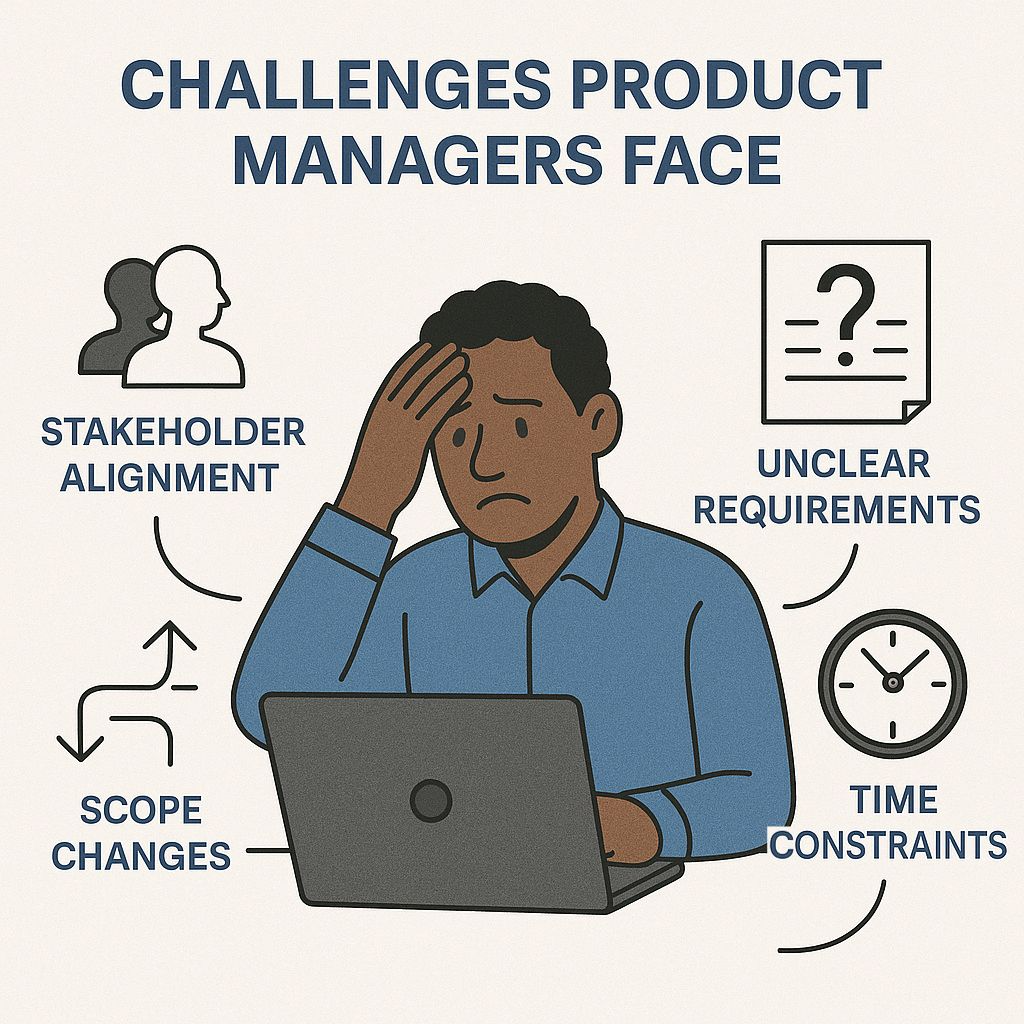
- Stakeholder Alignment: Balancing stakeholder demands often leads to tough trade-offs.
- Limited Time: PMs are expected to deliver results usually under very tight deadlines.
- Unclear Requirements: Product requirements are rarely clear from the start, which means PMs must embrace uncertainty.
- Measuring Success: Not all impact is immediately measurable, especially when the scope keeps changing. This can create tension with stakeholders who focus on short-term results.
Great PMs navigate these challenges with resilience, adaptability, and clear communication.
Product Managers as the Cornerstone of Software Success
The success of a software product rarely depends on technology alone. It depends on how well the product addresses customer needs, delivers business value, and adapts to change. This is why the role of the Product Manager is indispensable.
By defining vision, aligning teams, and championing the customer, PMs ensure that software development is not just about writing code. It becomes a process of delivering meaningful, successful products.
For businesses that want to scale, innovate, and win in competitive markets, investing in strong product management is no longer optional. It is essential.
OUR EVENTS
Join Our Events & Programmes
Our events bring industry leaders together to share insightful knowledge. Replay the sessions with our previous guests and register to join upcoming events.


Copyright © Enyata 2026. All rights reserved. Privacy Policy


