Enterprise Software Trends 2026–2030: What’s Coming and What to Do About It
Created on · Last updated
.png)
Enterprise Software Trends 2026–2030: What’s Coming and What to Do About It
Enterprise software is changing fast and most organisations aren’t keeping up.
The systems that felt solid five years ago are now what’s slowing teams down. Markets move faster. Customers expect more. Regulations keep multiplying. And somewhere in the middle of all that, your platform still needs to actually work.
Over the next 3–5 years, the companies that pull ahead won’t necessarily have the biggest platforms. They’ll have the ones that can change without breaking.
Here’s what’s driving that, and where to focus.
1. Composable Architecture Is Replacing Monolithic Enterprise Software
If updating one part of your system means putting the whole thing at risk, you already have the problem this trend is solving.
Monolithic platforms made sense when stability was the priority. But when the business needs to move quickly (whether that is launching a new product line, responding to a regulation, or integrating an acquisition), a tightly coupled system becomes the bottleneck. Every change is a project. Every integration is a negotiation.
Composable architectures, built on microservices and APIs, let teams update individual parts of a system without touching everything else. The 2024 DORA State of DevOps Report puts numbers to this: elite teams using these approaches deploy 182 times more frequently than low performers, with 8 times fewer failures. That’s not a marginal difference.
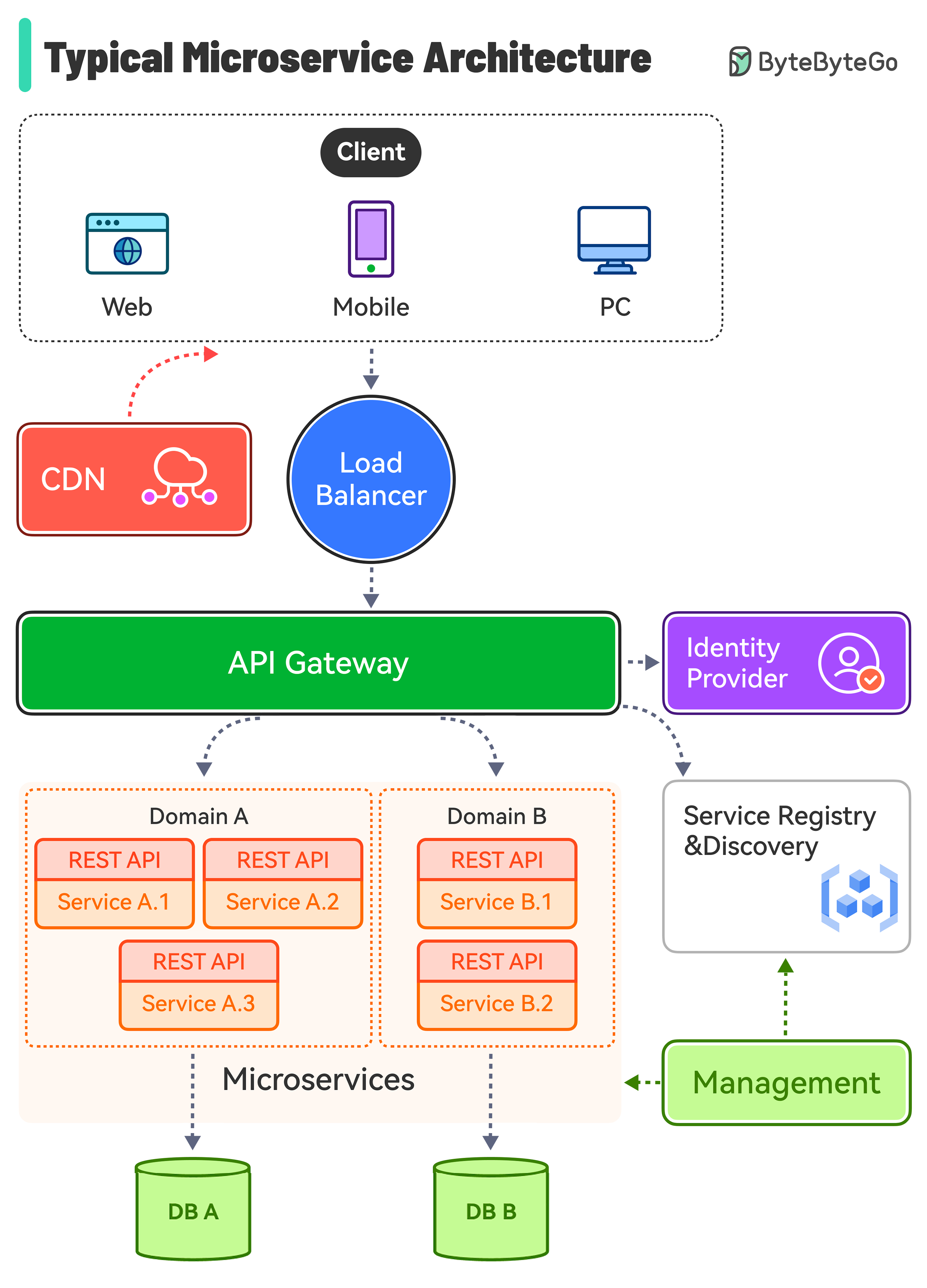
Elite software teams deploy 182x more frequently than low performers, with 8x fewer failures. — DORA State of DevOps Report, 2024
What to do now:
- Don’t start with a full rewrite. Find the part of your system that changes most often and modularise that first.
- Get your API design right early; it becomes the connective tissue for everything that follows.
- Treat modernisation as a continuous process, not a one-time programme.
- Track deployment frequency as a metric. It tells you more about architectural health than most technical audits.
2. Customer Experience in Enterprise Software Is Now a Business Metric
Enterprise software has a long history of being built for the people who buy it, not the people who use it.
That created a generation of platforms that are powerful on paper and painful in practice. And for internal tools, you could get away with it; employees adapt. But a lot of enterprise software isn’t internal anymore.
When the experience is confusing or slow, they leave or call your support line, which costs you either way.
As cloud-native development has become standard, user expectations have risen with it. People carry the best-designed software in their pockets all day. They’re not going to lower the bar because your system happens to be enterprise-grade.
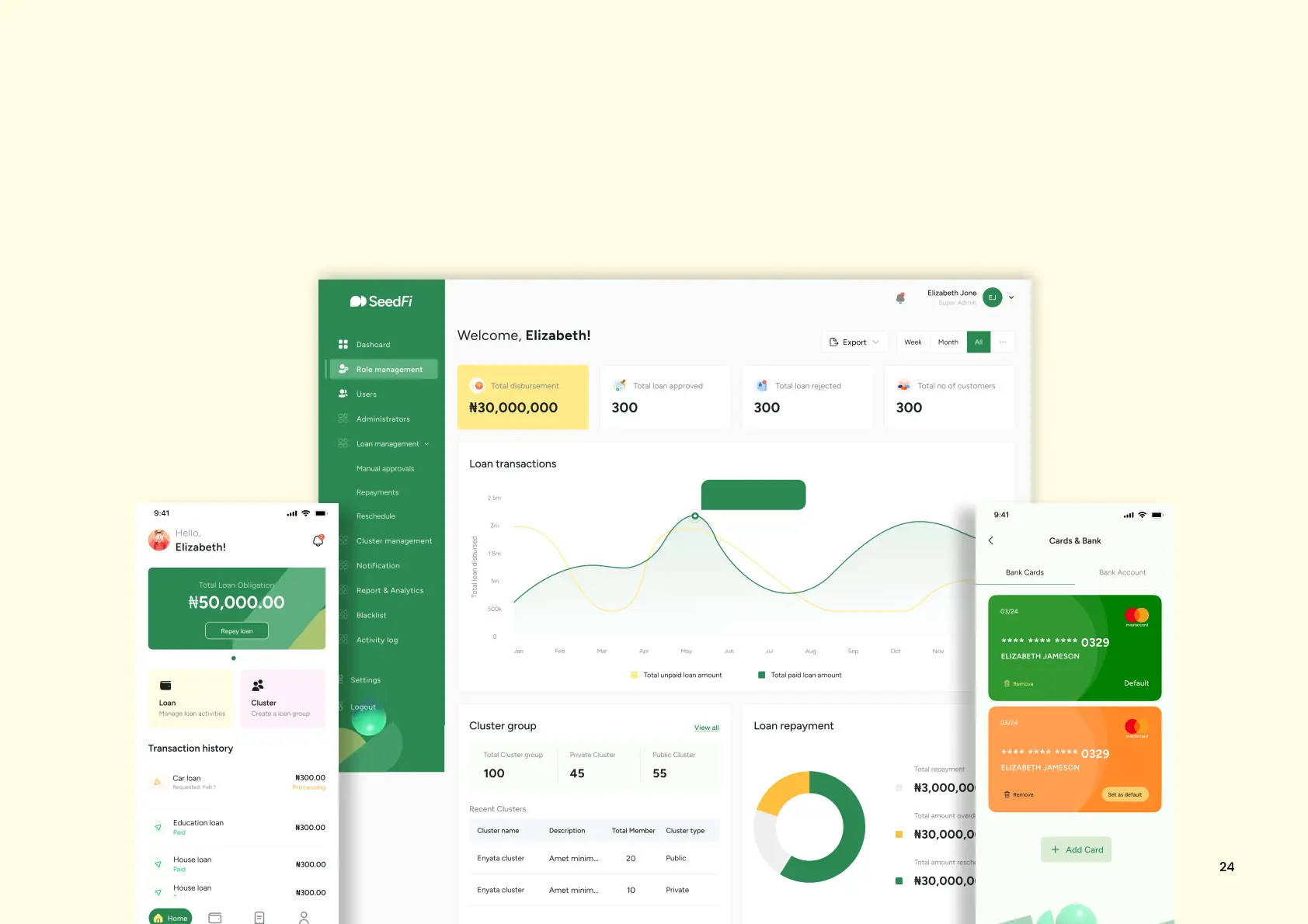
Enterprise software that entices doesn't just make things look cleaner, they redesign workflows around how customers actually move through a task and it shows up in retention, NPS, and support volumes.
What to do now:
- Map real customer journeys through your software, not the ones your documentation assumes they take.
- Pull your support ticket data before running any UX project, it tells you exactly where people are getting stuck.
- Test with actual customers on a regular cadence. A launch-and-forget approach misses how behaviour changes over time.
- Hold customer-facing enterprise software to the same design standard as any consumer product (because users already are).
3. AI in Enterprise Software Is Moving from Insight to Action
Most enterprises have invested heavily in data. They have dashboards, reports, and analytics platforms. What they often don’t have is a way to close the gap between seeing something and doing something about it.
That gap—between insight and action—is where AI is starting to make a real difference. Not AI as a chatbot bolted onto an existing product, but AI embedded into workflows: flagging exceptions, routing decisions, triggering actions, handling the high-volume repetitive work that currently requires a human in the loop.
Gartner predicts 80% of enterprise software will be multimodal by 2030, up from less than 10% in 2024. Separately, 40% of enterprise apps will include task-specific AI agents by the end of 2026, up from less than 5% in 2025. — Gartner, 2025
The organisations seeing real returns from this pick a specific process (invoice approvals, claims triage, compliance checks) and go deep on that one thing before scaling.
What to do now:
- Start with a process that is high-volume, repetitive, and has clear decision rules. These are the easiest wins and the fastest to prove value.
- Embed AI to trigger actions, not just surface information. The goal is fewer handoffs, not better reports.
- Keep humans in the loop where it matters and be explicit about where they’re not; your teams and customers both need to know.
- Sort your data quality before your AI ambitions. The biggest obstacle is usually the data going into the model, not the model itself.
4. Multi-Cloud Strategy Is Becoming the Enterprise Standard
A few years ago, picking a cloud provider was a strategic decision. Now it’s more like picking a utility (you probably use more than one, depending on what you need).
Multi-cloud and hybrid approaches are becoming standard not because enterprises want more complexity, but because single-provider dependency creates real risks. Regulatory requirements in some markets mandate where data lives. Some workloads genuinely perform better on specific infrastructure. And concentration risk—what happens if your single provider goes down—is increasingly a board-level concern.
Global spending on public cloud services is forecast to surpass $1 trillion in 2026, growing over 21% year-on-year, and is expected to double by 2029. — IDC, March 2026
Edge computing is part of this too. For sectors like manufacturing, logistics, and retail where milliseconds matter, waiting on a round trip to the cloud isn’t an option. Platforms built for these environments need to work across distributed infrastructure without falling over.
What to do now:
- Map your current cloud concentration risk. If one provider going down would take your operations with it, that’s worth addressing now.
- Build for portability from the start, containers and orchestration make switching or splitting workloads far less painful later.
- Don’t choose providers based on cost alone. Data residency requirements and performance characteristics should drive the architecture.
- Revisit your cloud cost model annually. The economics shift faster than most technology planning cycles.
5. Enterprise Software Security and Compliance Must Be Built In
The old model was: build the product, then hand it to security for a review.
That model is broken. It’s too slow, it finds problems too late, and it treats compliance as something that happens to the product rather than as part of it. With GDPR, CCPA, and the EU AI Act all adding obligations, and data volumes continuing to grow, the cost of getting security wrong keeps rising.
79% of security and IT teams cite security gaps as a top concern in enterprise and cloud software adoption. — Cloud Security Alliance
The teams handling this well have stopped treating security as a gate at the end of the delivery process. They run automated compliance checks continuously, build audit trails into product workflows, and apply zero-trust principles by default, meaning access is verified at every point, not just at the front door. Done right, this doesn’t slow delivery. It speeds it up because you stop discovering problems in production.
What to do now:
- Add automated security and compliance checks to your delivery pipeline. Catching issues before production is always cheaper than after.
- Adopt zero-trust as your default access model, not a project to get to eventually.
- Build audit trails into workflows from day one. Retrofitting them is painful and expensive.
- If you’re deploying AI tools, look at EU AI Act requirements now—compliance debt in AI will be significant for those who wait.
6. Low-Code Platforms Are Changing Who Builds Enterprise Software
There’s a gap between how much software enterprises need and how many developers are available to build it.
Low-code and no-code platforms let finance teams, operations managers, and HR staff build and automate tools themselves, using visual interfaces instead of code. This is becoming the default approach for a significant chunk of enterprise development.
Gartner forecasts 75% of new enterprise applications will be built using low-code tools by 2026, up from less than 25% in 2020.
The risk isn’t the technology. It’s deploying it without guardrails. Low-code without governance creates exactly the kind of sprawl it was supposed to solve: unofficial tools, inconsistent data, and security gaps. The organisations getting this right treat it as a capacity strategy with clear rules, not a free-for-all.
What to do now:
- Decide what business teams can build independently before you roll out any platform.
- Choose platforms that integrate with your existing identity, security, and data governance stack, not just the ones that are easiest to demo.
- Treat low-code as a way to free up engineering for complex work, not a way to cut the engineering budget.
- Set up a feedback loop between citizen developers and IT so problems surface early.
What the Next 3–5 Years Will Reward
Enterprise software is no longer judged by how much it can handle. It’s judged by how quickly it can change.
Every trend here points in the same direction: the advantage goes to platforms that are modular enough to update, intelligent enough to act, simple enough for customers to use, secure enough to trust, and open enough for more people to build on.
None of this requires a transformation programme. The organisations moving fastest are doing it one system at a time, one workflow at a time, making architectural decisions now that they won’t have to undo in three years.
Speed, clarity, and adaptability won’t be differentiators for long. They’re becoming the baseline. The question is whether you’re building toward them now or catching up later.
Where to Start
If you’re not sure which of these to tackle first:
- Find your slowest-moving system: the one where every change becomes a project. That’s your first modernisation candidate.
- Talk to customers who use your software directly. Don’t rely on internal assumptions about where the experience is failing.
- Pick one repetitive, high-volume decision in your operations and run an AI pilot there before building a broader strategy.
- Map how much of your infrastructure sits with a single cloud provider. If the answer makes you uncomfortable, that’s useful information.
- Add one automated compliance check to your delivery pipeline this quarter. Start small, but start.
- Before rolling out any low-code platform, agree on what business teams can build without IT sign-off and what they can’t.
Check what’s working every quarter. Double down on that.
And finally, contact us for any of these services. We're your best bet.
OUR EVENTS
Join Our Events & Programmes
Our events bring industry leaders together to share insightful knowledge. Replay the sessions with our previous guests and register to join upcoming events.


Copyright © Enyata 2026. All rights reserved. Privacy Policy


