Consumer UX vs Enterprise UX: Which is Right for Your Business?
Created on

User Experience (UX) is the key factor in determining whether an app or website is easy to use and performs its intended functions efficiently. UX encompasses everything from how quickly a page loads to how easily users can accomplish tasks.
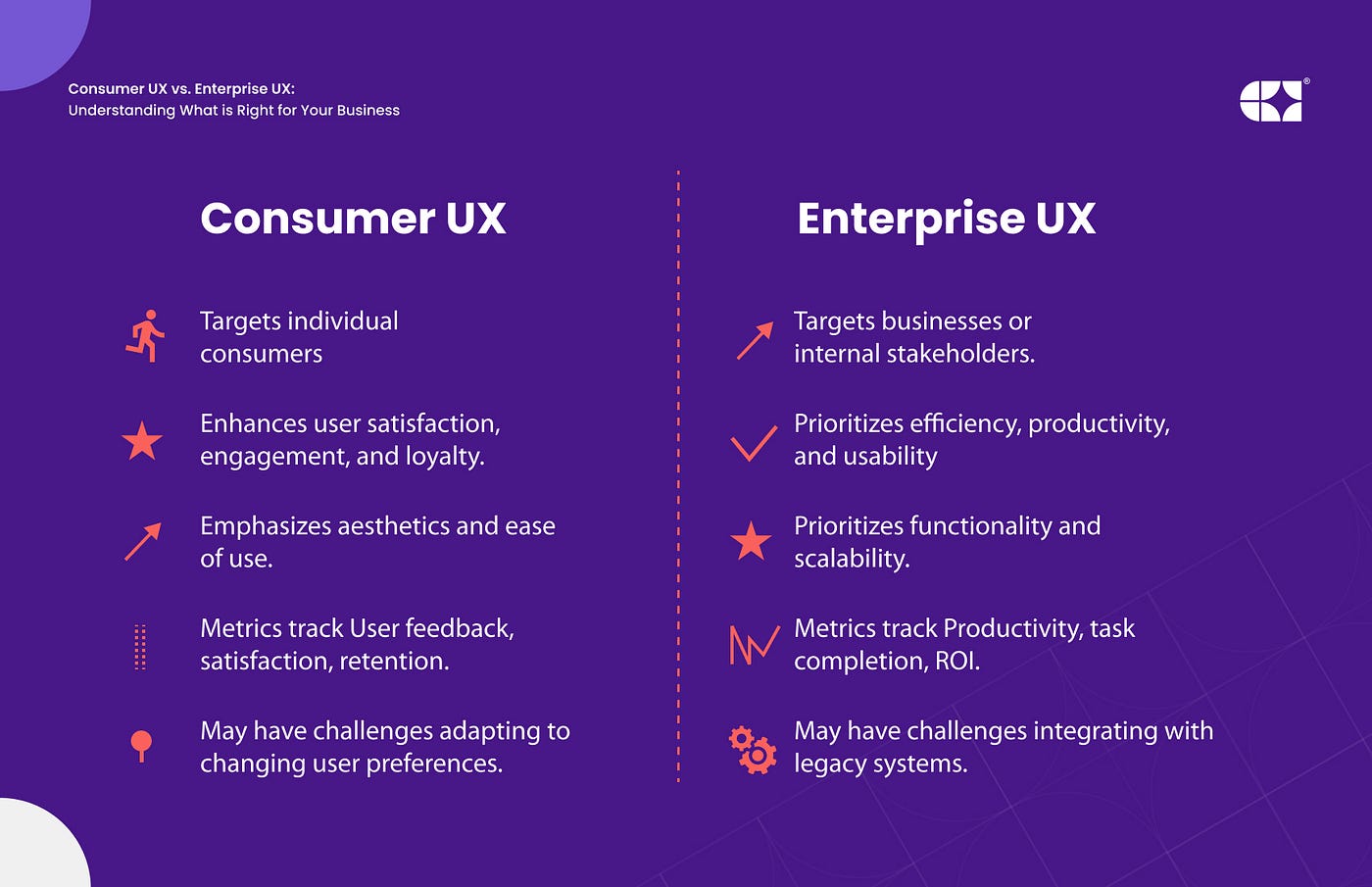
Consumer UX focuses on creating seamless, user-friendly experiences for individual users, prioritizing ease of navigation and visually appealing designs. Enterprise UX, on the other hand, is tailored for businesses and organizations, emphasizing efficiency, productivity, and scalability.
Since Consumer UX and Enterprise UX cater to different audiences, their design approaches must differ as well. Every software product needs to appeal to its target users while supporting the functions it is intended to perform.
To get a quick overview of the differences between these two types of UX, check out the infographic below. For a more in-depth exploration of which UX approach is right for your business, keep reading.
Consumer UX
Consumer User Experience is the design of digital products aimed at individuals. The primary goal of Consumer UX is to enhance user satisfaction, drive retention, and encourage brand loyalty.
Key Aspects of Consumer UX:
- Intuitive Design: Consumer UX focuses on creating an intuitive, engaging experience. The interface should be easy to use, with minimal friction. Users should be able to quickly understand how to navigate the product without confusion or frustration.
- Personalization: Great consumer UX caters to individual preferences. Businesses should strive to understand their users as intimately as a friend who knows their likes and dislikes. This enables the creation of a product that delivers a meaningful, personalized experience.
- Simplicity: The experience should be straightforward and simple. The goal of technology is to make life easier, not more complicated.
Benefits of Consumer UX for Businesses:
- Increased User Satisfaction: A well-crafted UX enhances user satisfaction by providing a delightful experience, leading to greater brand loyalty.
- Higher Retention Rates: When users have a seamless, enjoyable experience, they are more likely to return. This reduces the need for constant customer acquisition.
- Boosted Conversions: A user-centric design leads to higher conversion rates for key actions such as purchases or sign-ups.
- Reduced Support Costs: A well-designed UX allows users to complete tasks efficiently with fewer errors, which reduces the need for customer support.
Enterprise UX
Enterprise UX focuses on designing digital experiences for organizations, with an emphasis on optimizing productivity, workflow efficiency, and scalability. It’s about making software that works well for employees and other stakeholders who use it to get work done.
Key Aspects of Enterprise UX:
- Data Presentation: Enterprise UX relies heavily on presenting data in a clear, organized way. Dashboards, reports, and data visualization tools are essential for providing valuable insights. The design should facilitate quick access to information and smooth navigation between different tasks or functions.
- Integration: Enterprise software often needs to integrate with existing systems and tools to ensure seamless workflows and data sharing.
- Security and Compliance: Businesses often operate in highly regulated environments. Enterprise UX must include features that support security, privacy, and compliance with relevant regulations and policies.
Benefits of Enterprise UX for Businesses:
- Enhanced Efficiency: A well-designed enterprise UX streamlines workflows, reduces the time required to complete tasks and minimizes errors. This boosts overall productivity and operational efficiency.
- Lower Training and Support Costs: Simplified, intuitive interfaces make it easier for employees to learn the system, reducing the need for extensive training and minimizing reliance on IT support.
- Improved Collaboration: Effective UX design facilitates collaboration by enabling employees to share information and coordinate activities seamlessly, whether they are in the same department or spread across multiple locations.
Which UX Approach is Right for Your Business?
Whether your business should focus on Consumer UX, Enterprise UX, or a combination of both depends on your goals and target audience. Many B2C companies opt for a blend of both—creating an easy, enjoyable experience for customers while also developing internal systems that help employees work more efficiently.
Ultimately, the key is to prioritize user experience and ensure that your design choices align with the unique needs of your business and its users. By doing so, you can create UX solutions that not only deliver value to end users but also contribute to the success of your organization.
OUR EVENTS
Join Our Events & Programmes
Our events bring industry leaders together to share insightful knowledge. Replay the sessions with our previous guests and register to join upcoming events.


Copyright © Enyata 2026. All rights reserved. Privacy Policy


