Collaboration is the New Gold | Enyata x IDC Buildathon 2026
Created on · Last updated
.jpg)
Enyata x IDC Buildathon: A Public Report
Why We Came Together
Enyata's relationship with the Nigerian tech ecosystem runs deeper than software. For years, the Enyata Community, a CSR initiative of Enyata, has shown up for the ecosystem in tangible ways. Between 2021- 2023, that looked like distributing 50 MacBooks to developers across the country. In 2024, they held an edition of the Buildathon with over 500 participants and financial incentives given to winners.
In late 2024, Enyata decided to bring it back — and go bigger.
The reason was simple: a gap. Across the Nigerian tech ecosystem, there’s a visible divide between newcomers trying to break in and mid-to-senior level engineers with real-world experience. Many early-stage developers lack hands-on engineering exposure, and specifically, experience integrating production-grade APIs into real products. This is experiential knowledge that doesn’t come from tutorials or courses. It comes from building something that has to actually work.
Interswitch made sense as a partner almost immediately. As one of Africa’s leading financial technology companies, Interswitch has a broad suite of APIs spanning multiple industries — payments, identity, health, agriculture, and more. Combining that infrastructure with Enyata’s community reach felt like a natural fit. So we started the conversation.
Part A: Planning and Registration
We (Chizurum as Interswitch Developer Community Manager and Daniel as Enyata Community Manager) mapped out the concept and built the initial plan in October and November 2025. The goal of getting 1,000 developers to participate felt audacious. We decided to go for it anyway.
Publicity
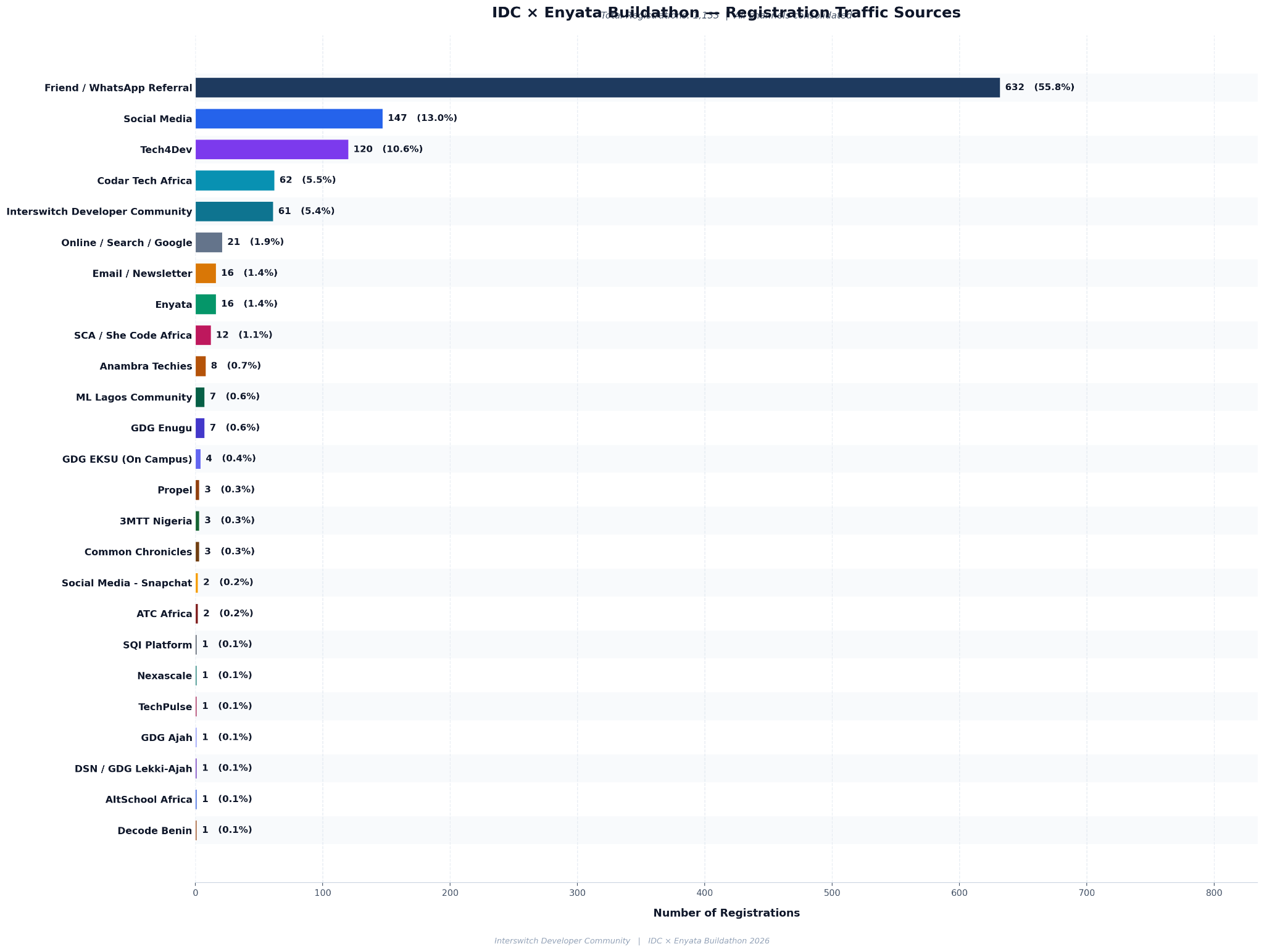
We shot a video at Enyata’s HQ outlining everything participants needed to get started. What we didn’t anticipate was how widely it would travel — specifically on WhatsApp. We used Claude to analyse where registration traffic came from (we had a ‘how did you hear about this hackathon?’ field on the registration page), and WhatsApp ranked number one. The top source, ‘friends and family,’ was almost entirely driven by WhatsApp, with people sharing through status updates, peer groups, and informal community chats.
That was a genuine surprise. WhatsApp, despite being informal, delivered our best results. Probably because people trust recommendations from their own circles more than anything an organisation can broadcast. Word of mouth wins again. Another unexpected one was Snapchat — we genuinely did not see that coming.
Building Community Partnerships
Most developers in Nigeria belong to at least one community - formal or informal. Enyata has a community of 7k+, Interswitch has about the same. We were aware that not everyone from our [communities might want to be a part of it so we decided to go beyond our communities and numbers.
We did warm outreaches - community leads we knew personally, had worked with in the past, or were already in WhatsApp groups with. Chizurum had spent time at an organisation working with over 200 African communities and still had strong relationships from that season. Combined with Daniel’s network, we had a solid starting list.
We built a tracker to stay on top of who we were speaking to, the status of each conversation, what needed to happen next, and who was responsible. We put together pitch decks (Claude and Manus.AI helped significantly here, alongside Canva for the visual execution), reached out directly, held introductory calls, and invited communities to come on board as partners.
What we were building was for the ecosystem, so it made sense to build it with the ecosystem. The partners we brought on board weren’t just amplifiers, they were stakeholders in the outcome. We’re genuinely grateful to Codar Tech, Nexascale, The Garage, Technoville, She Code Africa, Anambra Techies, Propel, ML Lagos, Tech4Dev, GDG Enugu, and ATC Africa for showing up the way they did.
Registration and Hitting the Target
Enyata handled the registration infrastructure, building the hackathon website and managing email communications. During the preparation phase, Chizurum wrote the correspondence for outbound emails and managed support for registration issues: team codes, undelivered confirmation emails, and similar hiccups.
When we didn’t hit our 1,000 target by March 6th, we extended the deadline. We honestly didn’t know whether it would work. Our approach was simple: try everything. More posts across social media, direct outreach to community partners, and a referral campaign where anyone who brought in 10 registrations earned a gift box. We exceeded our target on March 20th, closing at 1,187 registrations and over 500 teams formed.
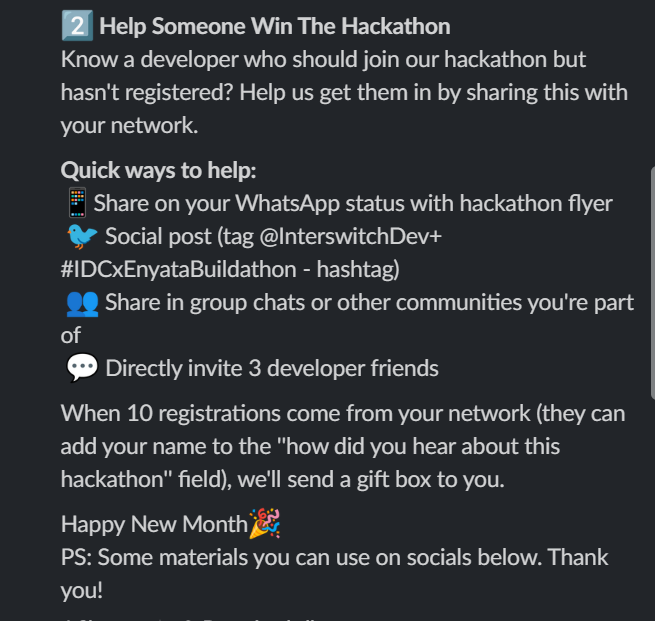
Image 1: A snapshot of this campaign on Interswitch Developer Community.
Part B: The Building Phase
The goal was twofold: give developers the creative latitude to solve problems they genuinely cared about, while ensuring they leveraged Interswitch’s API offerings which are broad enough to support almost any direction a team might go.
There was a structure. Teams of two to four people had to build within one of these sectors: Payments, Healthcare, Energy, Agriculture, Real Estate, Transport, Social Services, Cross-Border Payments, AI, or Blockchain. These sectors reflect Interswitch’s strategic focus areas, and each has corresponding Interswitch APIs that teams could integrate. The second requirement was to actually use those APIs in their solution, not just acknowledge them.
We ran the hackathon on Slack, with a dedicated channel for the event used for announcements, Q&A, and technical support. One technical support person was assigned specifically to help teams get unblocked throughout the four-day building phase.
APIs Most Commonly Used
Teams gravitated most toward:
- Interswitch Payment Gateway
- The Payout API
Identity and verification APIs including Bank Account Verification, NIN Verification, and BVN Full Detail, all from Interswitch’s API Marketplace
Submission Trends
A. Sector Dominance
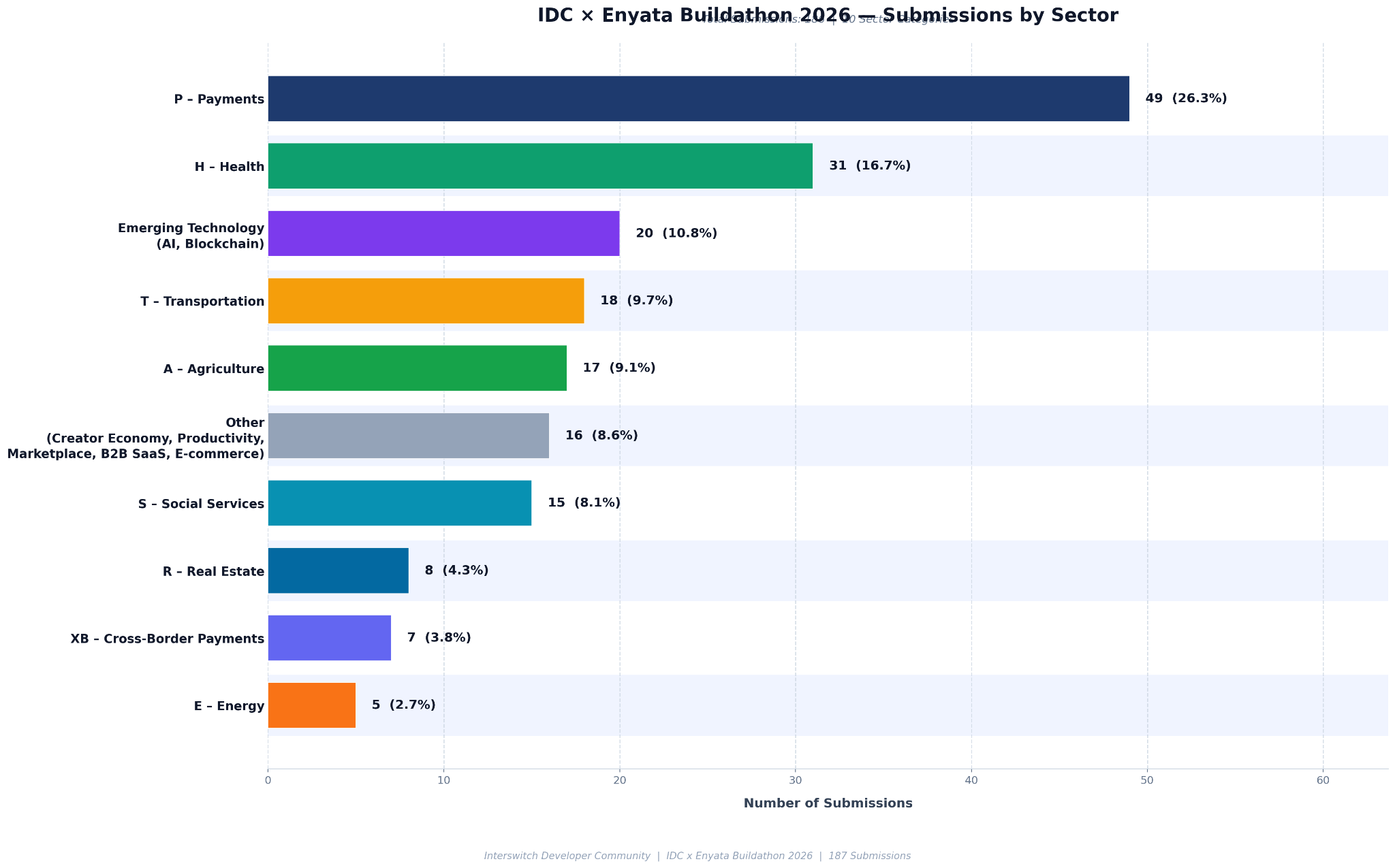
This data answers the simplest and most important question: what problems were participants actually trying to solve?
Payments led at 26.2% (49 projects) — nearly 1 in 3 teams built a payment-related product. The hackathon was co-organised by Interswitch, a financial technology company, and integration with Interswitch’s payment APIs was a core requirement. But it goes deeper: Nigerian developers have more reference points for payments infrastructure than any other sector. The solution space felt familiar, credible, and commercially legible.
Health came second at 16.7% (31 projects) — surprising to many, but very intentional from the builders’ side. Nigeria has a doctor-to-patient ratio far below the WHO recommendation, nearly zero digitisation in public hospitals, and out-of-pocket healthcare expenses are the norm. Participants clearly saw healthcare as a massive unsolved problem where technology could make a real difference.
Emerging Technology (AI and Blockchain) came in at 10.8% (20 projects), followed by Transportation at 9.7% (18 projects) and Agriculture at 9.1% (17 projects). Both reflect Nigeria’s most visible structural gaps: poor last-mile delivery infrastructure and the near-total absence of digital tools for smallholder farmers.
The long tail - Social Services, Real Estate, Cross-Border Payments, Energy — had fewer entries but some of the most differentiated ideas. Landrify (land fraud), Alyra (prepaid solar for off-grid communities), and Trustlens (digital identity) stood out precisely because fewer teams went there.
A few classification notes worth flagging: projects like DiagnosticsPay, HealthNet, and CareNow PayLater sit at the intersection of Health and Payments. They were assigned to Health since the primary user problem is healthcare access - payments are the mechanism. Similarly, KoroPay and RidePay were placed in Transportation. Projects building pure AI or blockchain tooling with no single-sector focus went into Emerging Technology
B. Cross-Sector Solutions
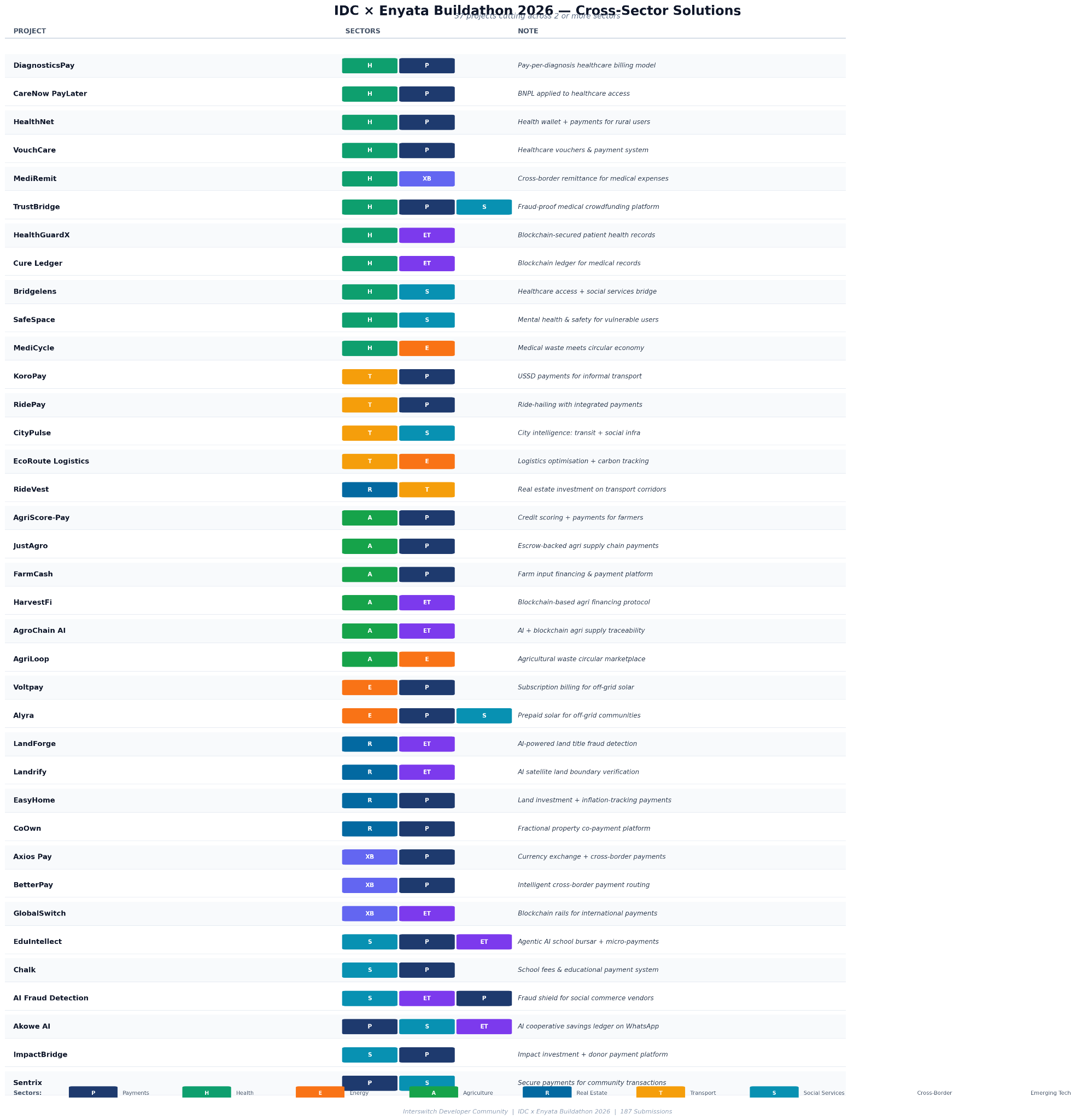
37 of the 187 submissions spanned more than one sector. A few patterns stood out.
Payments was the universal connector. It appeared as a secondary or tertiary sector in 22 of the 37 cross-sector projects. Whether it was health, agriculture, energy, or social services, almost every team found a reason to layer payments in. This reflects both the Interswitch API requirement and the fact that most Nigerian sector problems have a payment friction component embedded in them.
Health × Payments was the most common pairing: 5 projects sat squarely at that intersection - DiagnosticsPay, CareNow PayLater, HealthNet, VouchCare, and TrustBridge - each reflecting the acute gap between healthcare need and the ability to afford it in Nigeria.
Agriculture had the most diverse cross-sector reach. AgriTech projects crossed into Payments, Emerging Technology, and Energy simultaneously. Builders in this space were thinking about the full value chain from farm to finance, not just one isolated problem.
Four projects spanned three sectors simultaneously: TrustBridge (Health + Payments + Social Services), Alyra (Energy + Payments + Social Services), EduIntellect (Social Services + Payments + Emerging Technology), and Akowe AI (Payments + Social Services + Emerging Technology). These stood out during the review process for their ambition and conceptual clarity.
Other trends and note-worthy observations:
C. Build Maturity
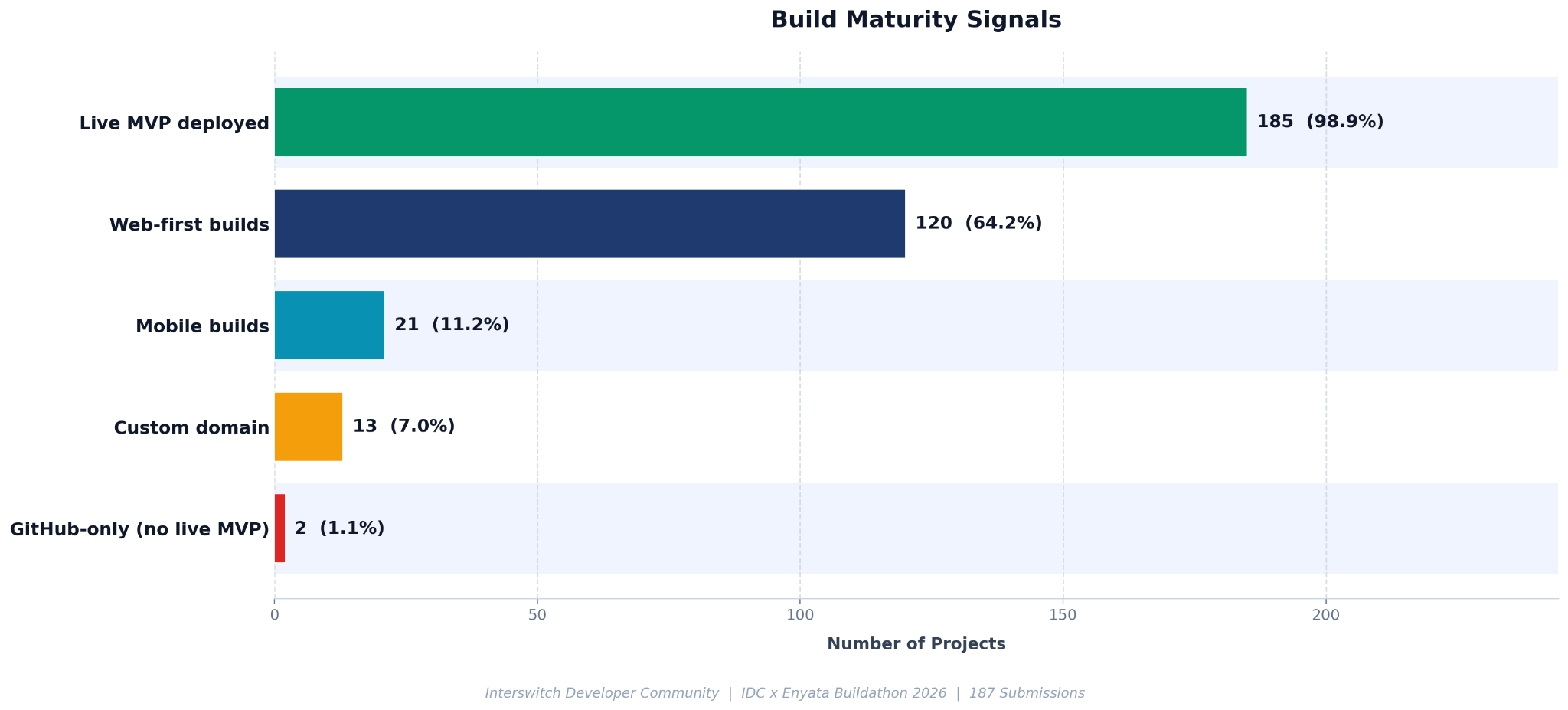
Part of the submission requirement was a working MVP — not a pitch deck. More than 98% of teams (185 submissions) delivered exactly that, with solutions built and deployed within the hackathon window. That’s an exceptional completion rate for a hackathon of this scale.
64% of teams built web-first, meaning browser-accessible apps rather than mobile. Only 11% built for mobile — which was actually the pragmatic choice, given that teams were demoing on screens. The 13 teams who deployed to custom domains stood out as a small but intentional group: a subtle indicator of teams who were thinking about their product beyond the hackathon itself.
D. Fintech Sub-Themes
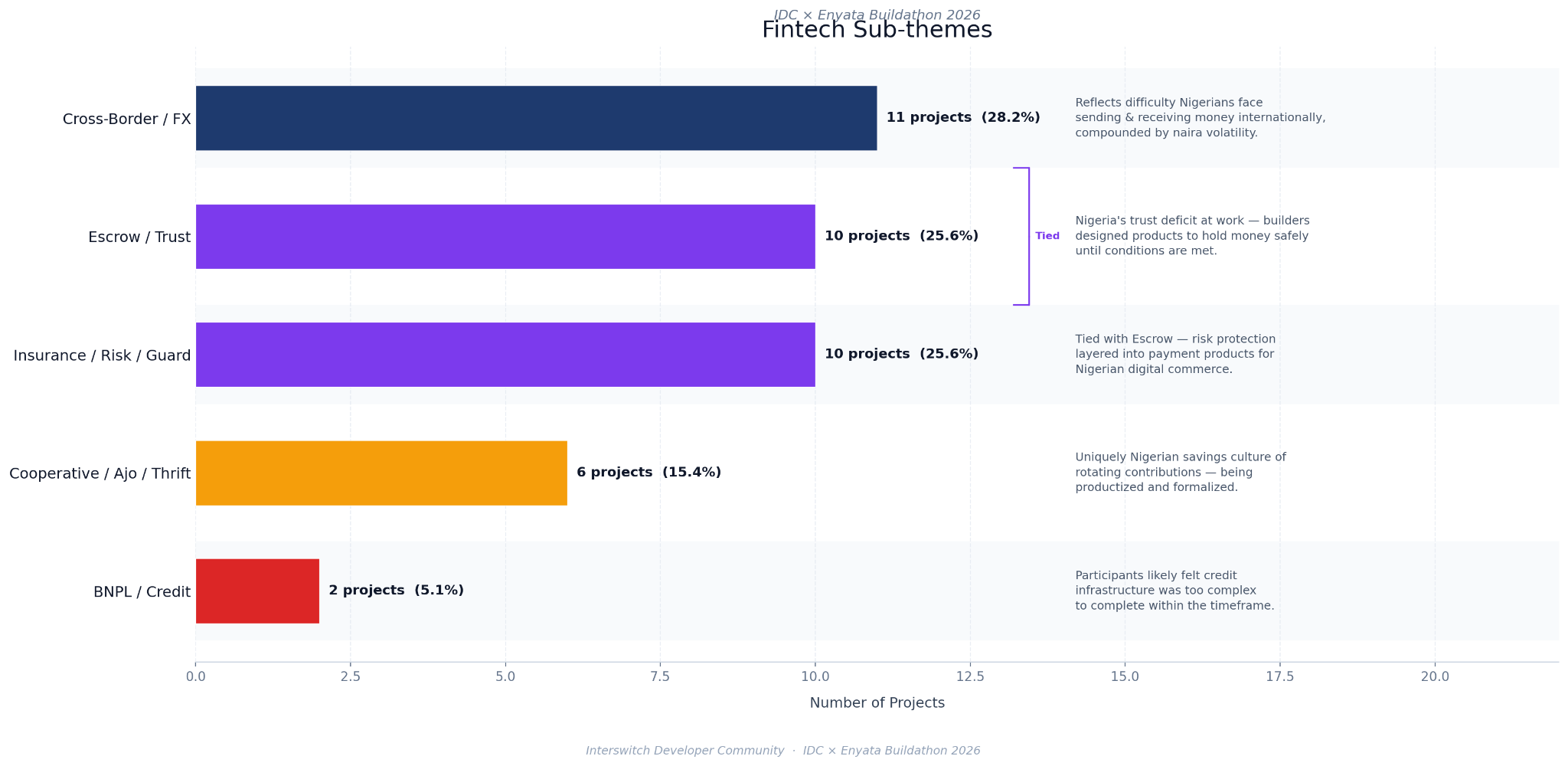
Within the payment-focused submissions, the most common sub-themes were revealing:
Cross-Border / FX led at 11 projects (18.3%): A direct reflection of the difficulty Nigerians face sending and receiving money internationally, compounded by naira volatility and high remittance costs.
Escrow and Insurance / Risk both tied at 10 projects each (16.7%): This is Nigeria’s trust deficit at work. Builders responded with products designed to hold money safely until conditions are met.
Cooperative / Ajo / Thrift appeared 6 times: The informal savings culture of rotating contributions among trusted circles, being productized and formalized. A uniquely Nigerian financial behaviour that developers chose to build on rather than replace.
BNPL / Credit came in surprisingly low at just 2 projects: This can be attributed to the timeframe for the hackathon. Participants probably did not think they would be able to finish building a solution in this sector within the given timeframe.
E. Deployment Platforms
How teams deploy is a useful proxy for the default tech stacks developers reach for under pressure.
Vercel dominated at 63.6% (119 teams) — the React/Next.js stack showing its clear dominance across the Nigerian developer community. Vercel is the fastest path from code to a live URL, and the numbers show it.
Render came second at 16, typically used for backend services like Node, Python, and FastAPI — indicating these teams had a separate backend layer running alongside their frontend. Netlify at 10 is similar to Vercel in purpose, though slightly older in adoption.
The outliers were telling: 3 teams used Lovable, an AI builder, meaning they built and shipped their entire product using a no-code tool rather than writing traditional code. Railway appeared 4 times — used by full-stack apps like Akowe AI, TapRail, Zescrow, and SOW that needed persistent backend infrastructure. Expo (React Native) appeared 5 times for mobile builds including CarryGo, MovePal, and AgroNet.
Why We Narrowed It to the Top 10
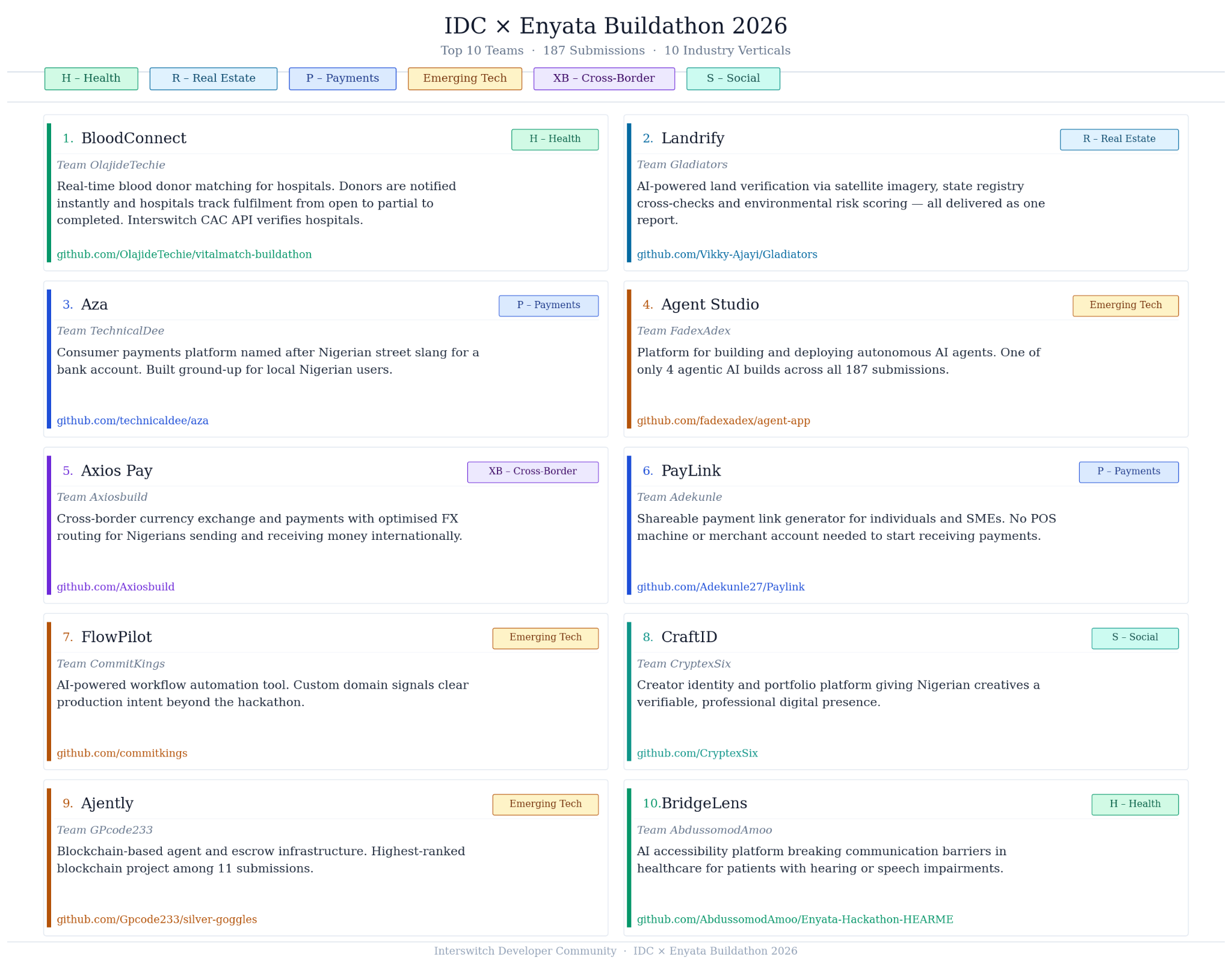
With a large pool of submissions, quality alone couldn’t determine impact. We needed focus. Narrowing the field to the top 10 teams was a deliberate choice to surface the best of what had been built; solutions rigorous enough to hold up under expert scrutiny and compelling enough to represent what this cohort was genuinely capable of.
It also gave us the ability to run a Demo Day that actually meant something. Judges could engage deeply with each team, ask real questions, and give meaningful feedback rather than skimming a long list of demos. That depth of engagement was important to us.
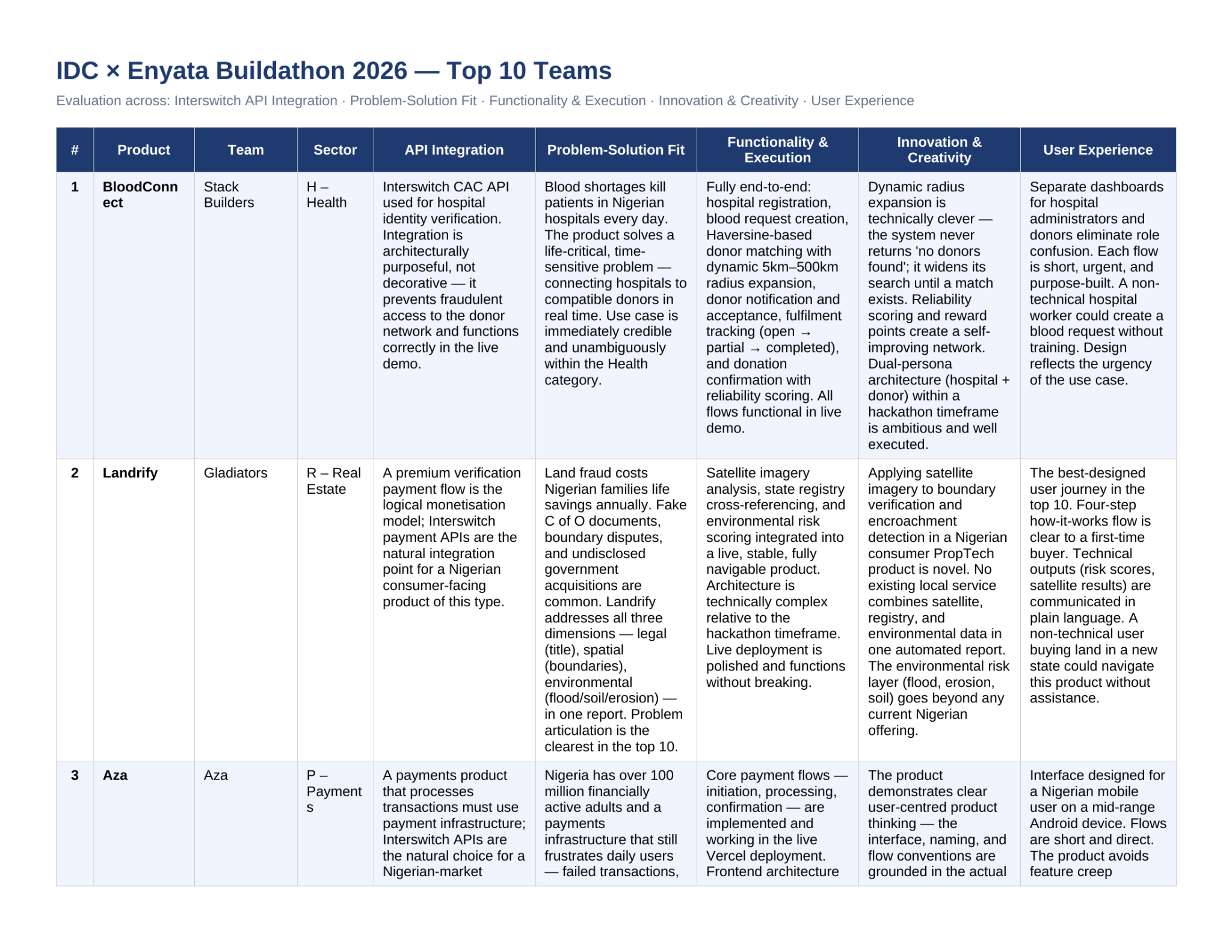
Our selection criteria covered five dimensions: Interswitch API Integration, Problem-Solution Fit within the PHEARTS sectors, Functionality and Technical Execution, Innovation and Creativity, and User Experience. The detailed evaluation for each of the top 10 teams is captured in the document below.
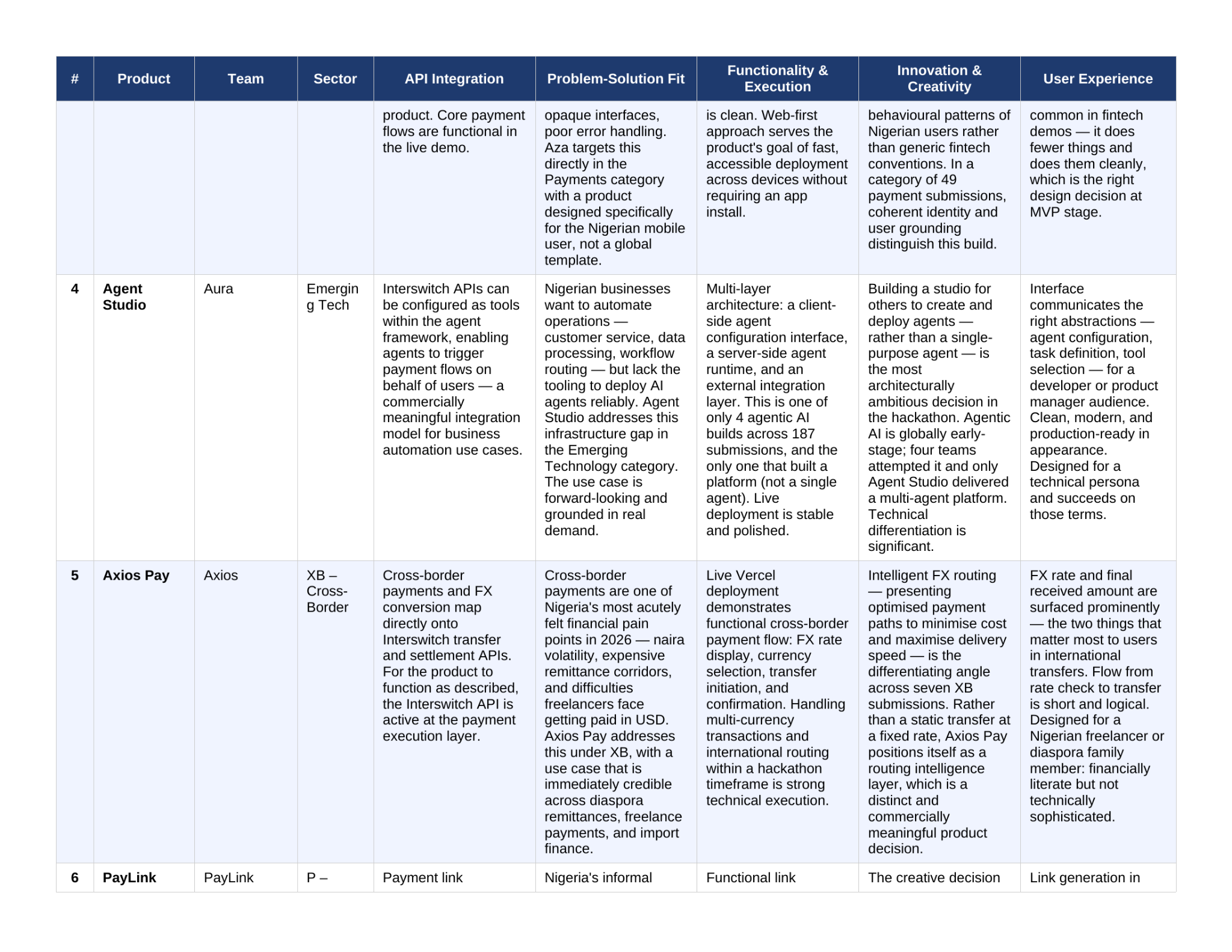
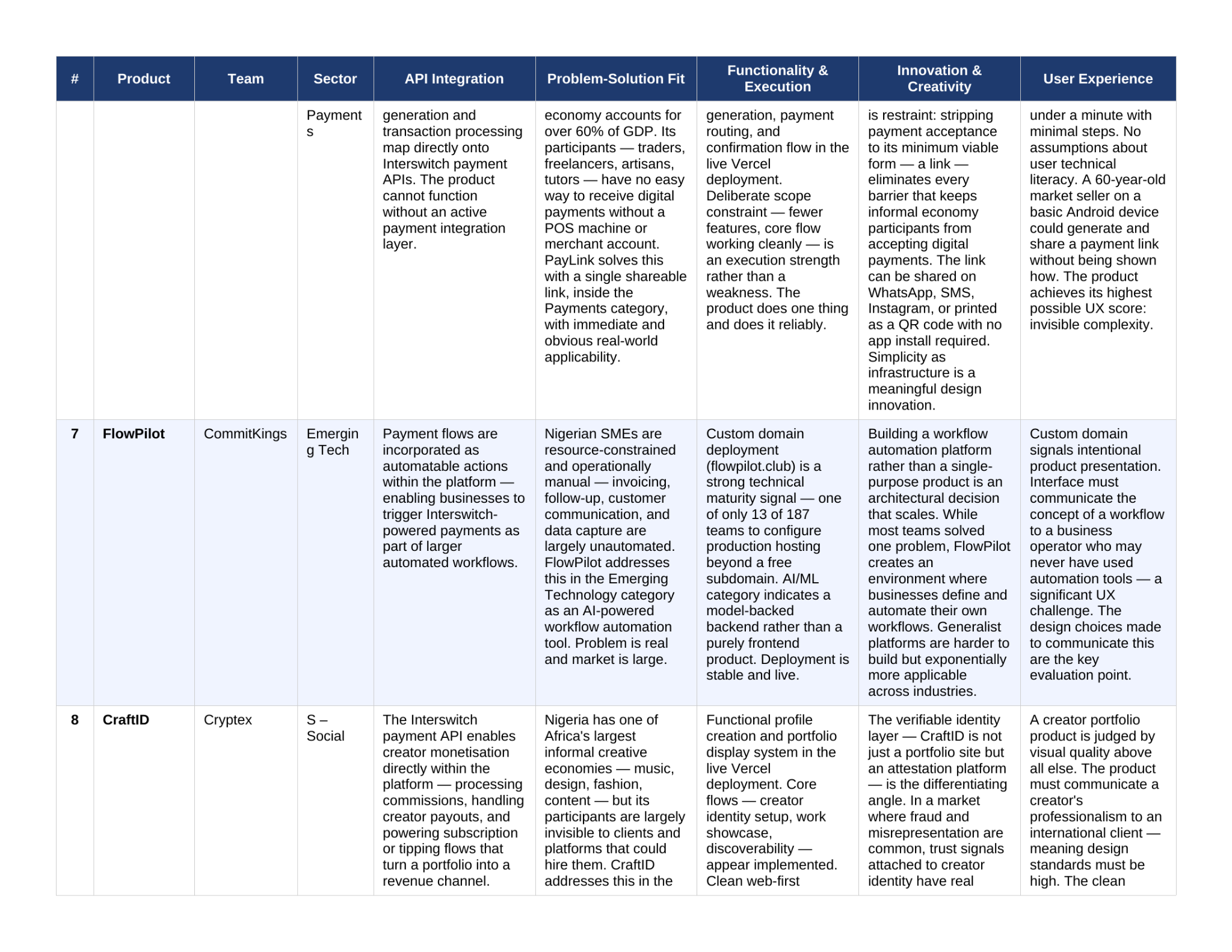
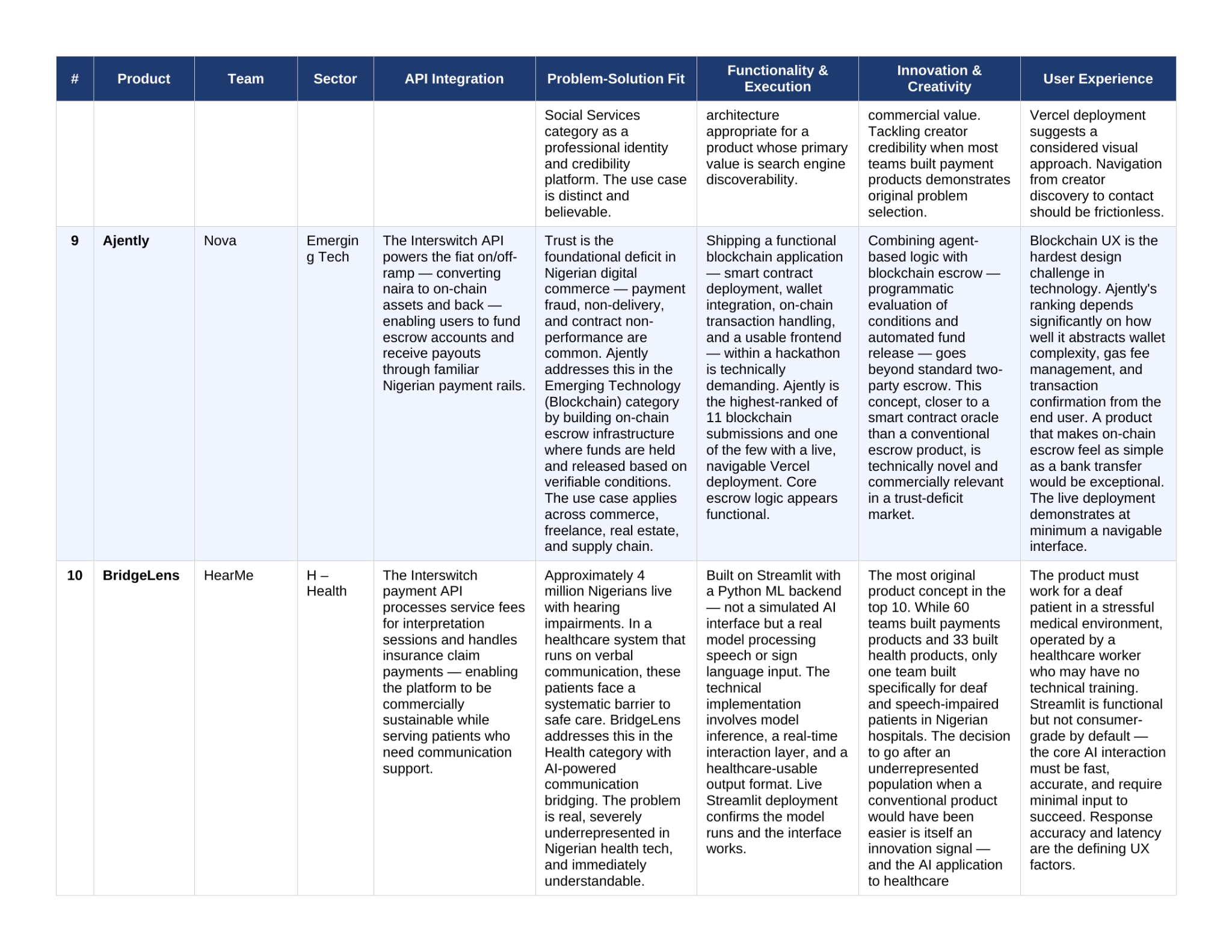

What This Proved
We set out to close a gap between developers who know theory and developers who have built real things. What we ended up with was more than a hackathon.
1,187 developers registered. Over 500 teams formed. 187 solutions were submitted and deployed within a four-day build window. Community partners from across Nigeria showed up without being paid to. And a handful of teams built products that, with the right support, have a life well beyond a hackathon submission.
This was never about finding new talent. The talent was never missing.
According to Dealroom's Global Tech Ecosystem Index 2025, which benchmarks 288 tech hubs across 69 countries, Lagos secured the number one position in the "Rising Stars" category, the world's fastest-growing tech ecosystem, outpacing Istanbul, Mumbai, and São Paulo. The city's tech ecosystem has grown 11.6 times in value since 2017, now valued at $15.3 billion, and has produced five unicorns: Interswitch, Flutterwave, Jumia, OPay, and Moniepoint, with unicorn creation tripling since 2019.¹ Nigeria's developer community grew by 45.6% between 2022 and 2023 - the fastest growth rate in Africa - reaching over 872,000 developers.² Nigeria, South Africa, and Egypt each have over 500,000 developers, making them the three largest developer bases on the continent.³
The ecosystem didn't need to be discovered. It needed the right environment to show what it could already do.
That is what this hackathon was: a structured forcing function. When you give Nigerian developers a real problem, a real API, and real stakes, they deliver. Thirty-seven teams built products spanning more than one industry sector. Four built agentic AI systems, a frontier that most developers globally are still exploring.
A few things confirmed what we suspected: WhatsApp is underrated as a distribution channel for developer communities and for companies building for this ecosystem. Warm relationships outperform cold outreach every single time. And the instinct Nigerian developers have for building solutions rooted in local reality - Ajo savings systems going digital, USSD payments for transport, land fraud being solved by satellite imagery - isn't something you teach. It comes from living in the market you're building for.
The volume surprised us. The quality, although not surprising given the maturity of this ecosystem, is something the rest of the world is going to have to reckon with.
We're grateful to every developer who registered, every team that built, every community partner who spread the word, and every judge who gave their time on Demo Day. The Nigerian tech ecosystem has not just grown; it is setting the pace. And with AI continuing to lower the barrier between an idea and a working product, what this community builds next will be even harder to ignore.
This was proof of that.
Co-authored by Daniel Umoren (Enyata) and Chizurum (Interswitch)
OUR EVENTS
Join Our Events & Programmes
Our events bring industry leaders together to share insightful knowledge. Replay the sessions with our previous guests and register to join upcoming events.


Copyright © Enyata 2026. All rights reserved. Privacy Policy


